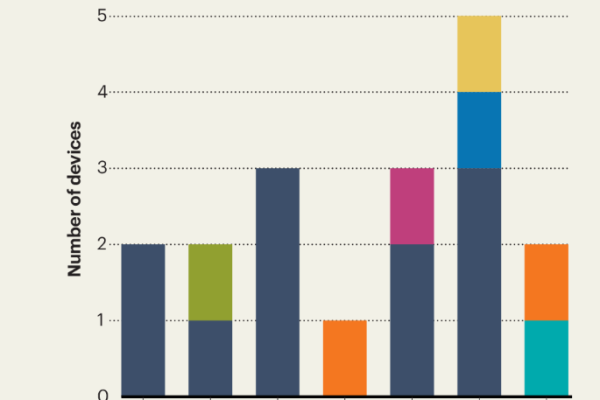





Authorization of prognostic AI medical devices

Thomas, JM, Cooney, LM and Fried, TR JAMA intern. Med. 179820 (2019). Article Google Scholar Riley, RD, D. van der Windt, Croft, P. and Moons, KGM (eds.). Prognosis research in health care: concepts, methods, and impact1st ed. (Oxford Univ. Press, 2019). Obermeyer, Z. & Emanuel, E.J. N.Engl. J.Med. 3751216-1219 (2016). Article Google Scholar Collins, GS…

Read More

Heterogeneous computing and the future of AI

Heterogeneous computing is quietly redefining how AI appears in everyday devices, bringing intelligence closer to where people actually use it rather than keeping it locked in remote cloud systems. As AI expands into physical products, success depends less on raw performance and more on how efficiently CPUs, GPUs, and NPUs work together. Heterogeneous computing manifests…

Read More

Penn professors discuss artificial intelligence classroom policies, University initiatives

As classrooms continue to integrate artificial intelligence tools across campus, Penn professors spoke to The Daily Pennsylvanian about how they are adopting the technology without compromising the learning process. Penn first announced its university-wide AI policy in November 2023, which outlined formal guidelines for the use of generative AI and machine learning tools. While the…

Read More

The Winning Edge Recap: Rethinking Denial Management Strategies to Counter Payer AI

As payers deploy advanced technologies to review claims, health systems like Mercyhealth and WellStar are fighting back with stricter contracts and predictive AI. In recent years, the fierce struggle to combat denial has gradually intensified. During this week’s The Winning Edge for Defeating Denials webinar, revenue cycle leaders from Mercyhealth and Wellstar Health System discussed…

Read More