


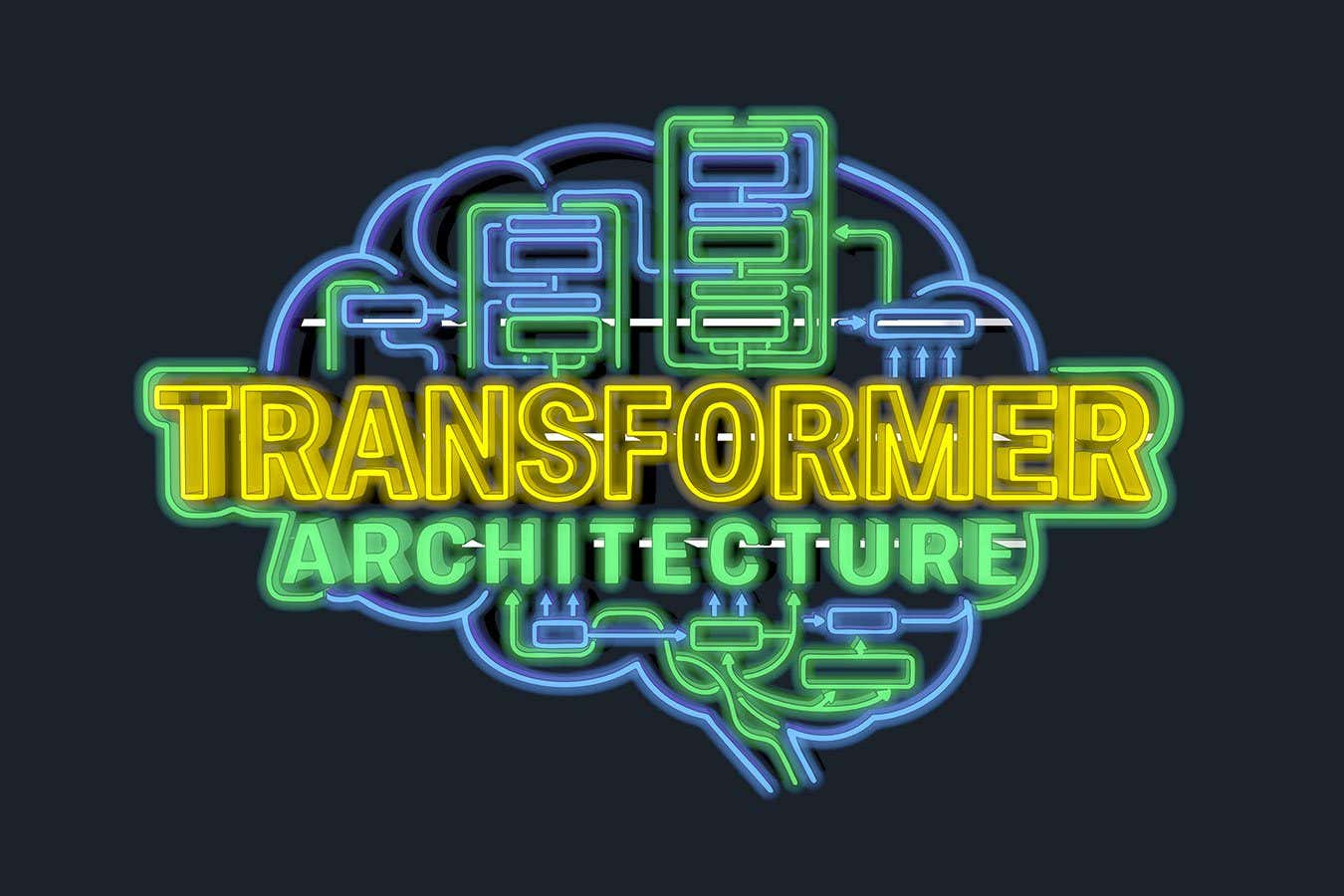
Today’s most powerful AI tools – those that can summarize documents, generate artwork, write poetry or predict how incredibly complex proteins fold – all rest on the shoulders of the “transformer”. This neural network architecture, first announced in 2017 at a modest conference center in California, allows machines to process information in a way that mirrors the way humans think.
Previously, most cutting-edge AI models relied on a technique called recurrent neural network. It worked by reading text in narrow windows, from left to right, remembering only what happened just before. This setup worked quite well for short sentences. But in longer, more tangled sentences, the models had to fit too much context into their limited memory, causing crucial details to be lost. The ambiguity disconcerted them.
The Transformers abandoned that approach and embraced something more radical: personal attention.
It’s surprisingly intuitive. We humans certainly do not read and interpret text by going through it word by word in strict order. We skim, we go back, we make assumptions and corrections by weighing the context. This type of mental agility has long been the holy grail of natural language processing: teaching machines not only how to process language, but also how to understand it.
Transformers imitate this mental leap. Their self-attention mechanism allows them to simultaneously compare each word in a sentence with all the other words, spot patterns, and construct meaning from the relationships between them. “You could mine all this data from the Internet or Wikipedia and use it for your task,” says an AI researcher. Sasha Luccioni at Hugging Face. “And it was extremely powerful.”
This flexibility is not limited to text either. Transformers now support tools that generate music, render images, and even model molecules. AlphaFold, for example, treats proteins – long chains of amino acids – like sentences. The function of a protein depends on how it folds and this, in turn, depends on how its parts relate to each other over long distances. Attention mechanisms allow the model to evaluate these distant relationships with very fine precision.
In hindsight, the idea seems almost obvious: intelligence, whether human or artificial, depends on the ability to know what to focus on and when. The transformer didn’t just help machines understand language. This gave them a way to navigate any structured data – much like humans navigate their own complex worlds.
Topics:
- artificial intelligence/
- neural networks