




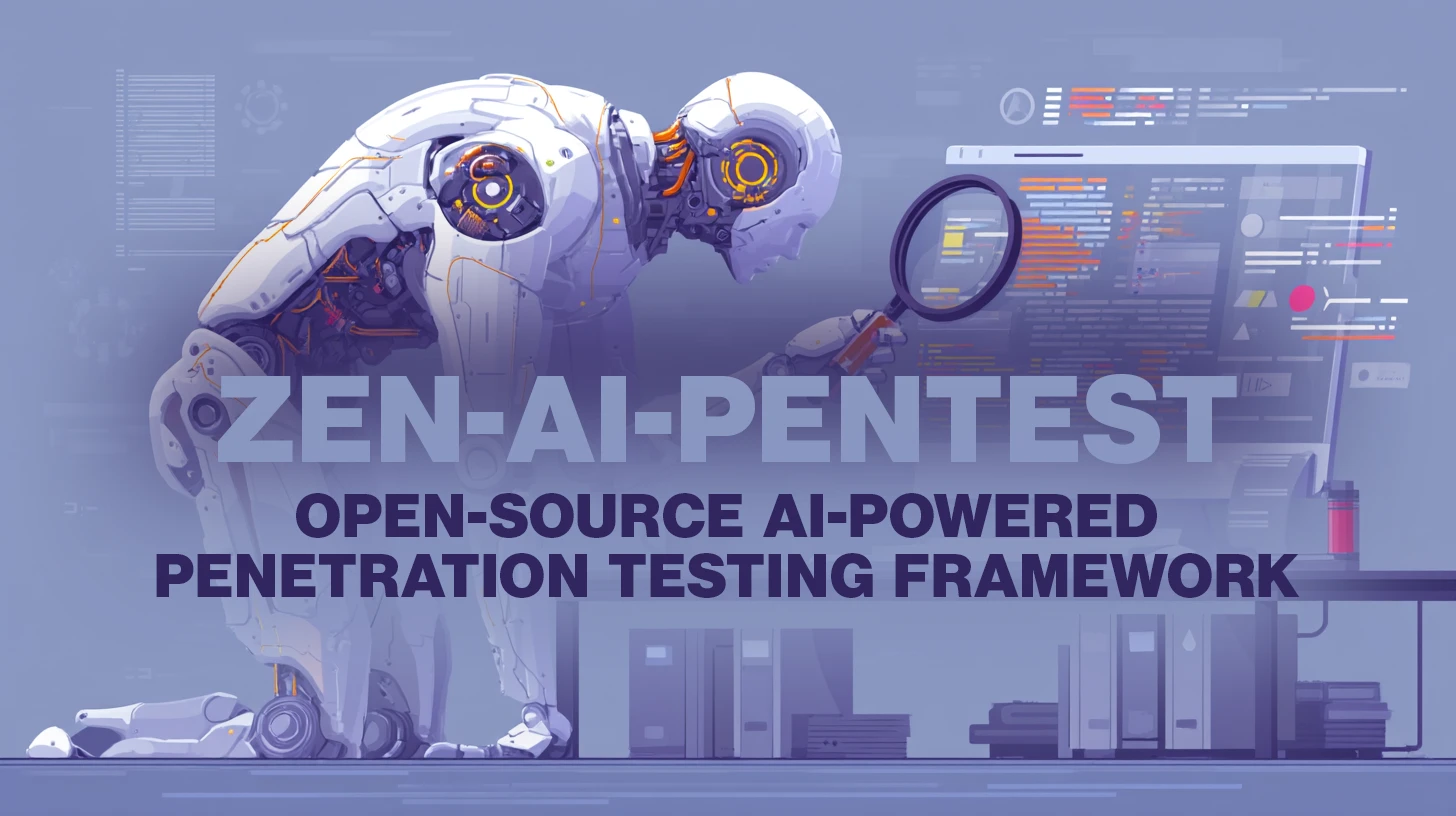
Zen-AI-Pentest provides an open source framework for analyzing and testing systems using a combination of autonomous agents and standard security utilities.
The project aims to enable users to execute an orchestrated sequence of reconnaissance, vulnerability analysis, exploitation and reporting using AI guidance and industry tools such as Nmap and Metasploit. It is written to support command line, API, and web interfaces.
Multi-agent structure and integrated tools
Zen-AI-Pentest organizes its functionality around a set of agents that manage discrete phases of a security assessment. A reconnaissance agent performs the initial information collection. A vulnerability agent runs scanning tools. An operations agent attempts to validate the results. A reporting agent compiles the results. Each agent is part of a larger state machine that controls a sequence of actions.
The framework integrates a range of established security tools. Nmap is included for network discovery. SQLMap manages database-related vulnerability checks. Metasploit is available for running exploits. The system also integrates external threat intelligence and LLM through vendor APIs.
Zen-AI-Pentest provides interfaces for users to interact with the system. A REST API can be called by other applications. A web user interface presents results in a visual format. A command line option allows practitioners to invoke functions directly.
AI involvement and risk management
The repository design uses LLMs to influence decision making during a penetration test. AI interacts with the state machine to guide which analysis tools and strategies to use. It can suggest follow-up actions based on the results of previous steps.
A risk engine attempts to quantify the impact and likelihood of findings generated by the system. It applies standard scoring metrics such as CVSS and EPSS to assess vulnerabilities. The framework also includes a voting mechanism that compares results from multiple models to reduce uncertain or erroneous results.
The exploit validation phase uses sandbox environments created with containerization. This setup captures evidence such as screenshots, HTTP captures, and packet traces while keeping execution isolated from production systems. A record of actions and findings is maintained for audit purposes.
Benchmarks and performances
Zen-AI-Pentest includes a benchmarking section allowing users to compare results with other frameworks and manuals. The scenarios cover common test targets such as intentionally vulnerable applications of learning platforms. Metrics collected include the length of time vulnerabilities were found, the number of vulnerabilities discovered, and the false positive rate.
These comparisons are intended to give security teams a basis for evaluating where automated workflows produce acceptable results compared to manual approaches or other tools. The repository reference subsystem also generates reports in visual form for easier interpretation.
DevOps pipelines and reporting options
Zen-AI-Pentest works with continuous integration systems. GitHub Actions, GitLab CI, and Jenkins are all supported via direct integration files. Results can be generated in JSON, XML, or SARIF formats, which are useful for automated tracking in development and security pipelines.
The reporting agent can send alerts through channels such as Slack and email. It records results in a way that fits into existing ticketing systems. This allows security teams to make their findings actionable within broader workflow tools.
Zen-AI-Pentest is available for free at GitHub.
Must read:
Subscribe to the monthly ad-free Help Net Security newsletter to stay informed about essential open source cybersecurity tools. Subscribe here!