





Pennsylvania lawmakers are considering new rules aimed at ensuring patients know when AI is used — and that a human has the final say.
HARRISBURG, Pa. — As artificial intelligence becomes increasingly common in doctors’ offices, hospitals and insurance decisions, Pennsylvania lawmakers are considering new rules aimed at ensuring patients know when AI is being used — and that a human has the final say.
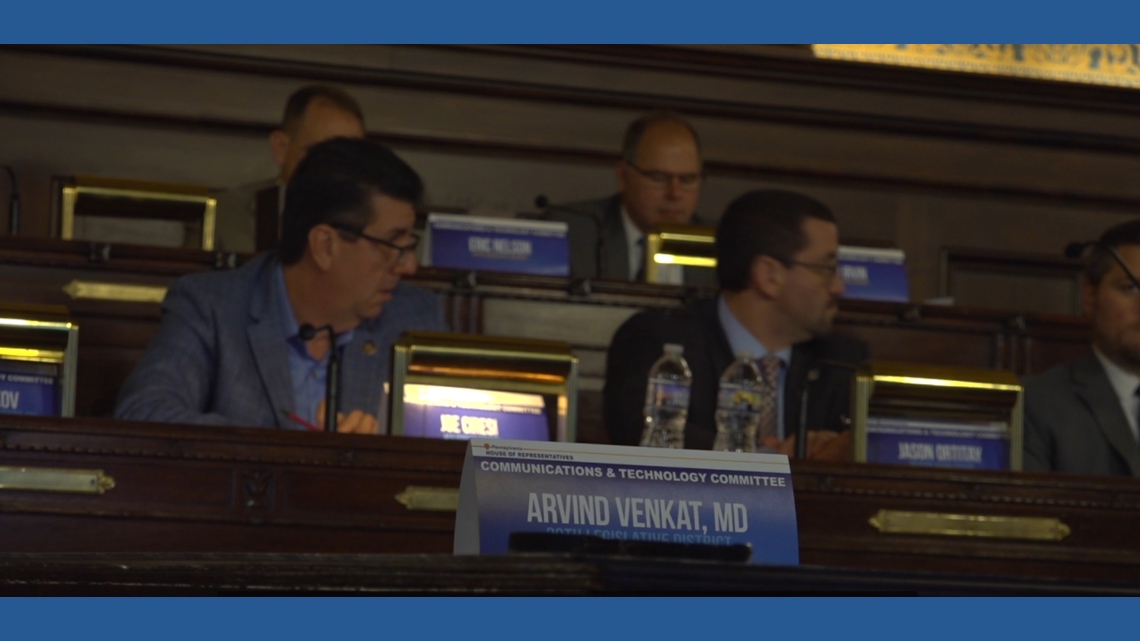
The Pennsylvania House Communications and Technology Committee held a public hearing Monday at the state Capitol on House Bill 1925 that discussed a bipartisan proposal that would regulate the use of artificial intelligence in health care settings, insurance companies and care plans managed by the Medical Assistance or Children’s Health Insurance Program.
State Rep. Arvind Venkat, a Democrat from Allegheny County’s 30th District, is a practicing emergency room physician and is at the forefront of the legislation. Venkat has worked in healthcare for 25 years and says AI is already reshaping the way care is delivered.
“This is a technology that is revolutionizing what we do for patients every day, and that’s not a bad thing,” Venkat said.
Venkat told lawmakers the concern was not innovation, but a lack of transparency and oversight, with AI tools increasingly used behind the scenes.
“Right now, we have very little transparency and understanding of how clinicians are applying AI to patient care,” he said.
The bill would require health care providers, insurers and managed care plans to disclose when artificial intelligence is used in clinical decision-making or in reviewing its use. The bill also states that AI tools cannot override human judgment and that a qualified professional must make the final decision when AI is involved.
“The challenge is that AI can make mistakes. The best evidence we have is that when it’s an expert clinician reviewing the AI results, we get the best results,” Venkat explained. “We need to ensure that when we use this technology, we apply it taking into account the expertise and particular circumstances of individuals.”
Venkat stressed that the bill was not intended to slow innovation or discourage the use of AI in healthcare. Instead, he said it was about building trust and ensuring compliance with existing laws.
“We want to see innovation,” Venkat said. “But we need to make sure the public has confidence in using this technology.”
He added that the use of AI in healthcare will only grow.
“We’re not going to stop this from happening, nor do I think we should,” Venkat said. “But I think we need to make sure that it is transparent, that it is tailored to each patient or the public and that it complies with existing laws.”
Five panels testified at Monday’s hearing, including representatives from state agencies, hospitals, insurers, medical professionals and technology and patient advocacy groups.
House Bill 1925 remains in the House Communications and Technology Committee. If the bill moves forward and is passed, the regulations will take effect one year after passage, giving health care organizations time to prepare.