



“Cybersecurity will be the first vertical to completely move from co-pilots to autonomous agents. The sheer speed of AI-based threats makes workflows involving humans a bottleneck rather than a protection,” said Yoni Osherov, general partner at Ouverture Capital, when asked which specific industry would be the first to fully trust AI with independent decision-making.
“We are moving towards ‘autonomous defense,’ in which AI agents make decisions in seconds about containment and remediation. In cybersecurity, the cost of not trusting the agent is already higher than the risk of the agent making a mistake,” he added.
1 View the gallery
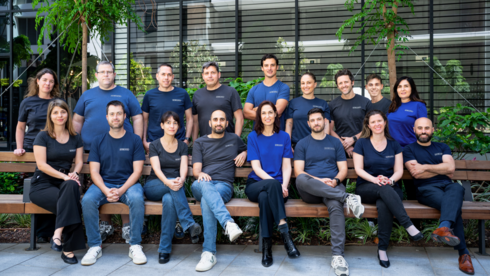
The Entry Capital team.
(Photo: Roei Shor)
“At the same time, voice and text contact center agents will be among the fastest to adopt agent models, operating autonomously in increasingly complex customer interactions. While brand risk keeps humans in the loop longer, rapid advances in infrastructure and increasing business urgency will continue to push new verticals toward full autonomy.”
You can read the entire interview below.
Fund name: Entry capital
Total assets under management: $1.5 billion
Partners/Managers: Avi Eyal, Ran Achituv, Eran Bielski, Yoni Osherov, Saul Levin, Tomer Niv, Eli Dubnov
Notable holding companies: monday.com, Riskified, HiBob, Gusto, Stripe, Anchor, BRIA, Darrow, Classiq, SpaceX, Empathy, AirEV, Blink, ClassiQ
Notable releases: monday.com, Riskified, Breezometer, Talon Cyber, Perimeter81, Coupang, Weavy, Deliveroo, Cazoo, Snapchat, PillPack
The Liquidity Leap: After a period defined by liquidity preservation, will 2026 see the reopening of the IPO window for Israeli tech, or will M&A remain the only viable liquidity event?
2026 will not mark a complete reopening of the IPO window, but rather a disciplined and selective reopening. We expect a small number of Israeli companies to go public, those that are clear category leaders, with hundreds of millions in revenue, predictable growth, strong net revenue retention and mature governance.
However, for the majority of startups, mergers and acquisitions will remain the primary avenue for liquidity. Strategic buyers are returning with greater clarity around synergies and pricing discipline, making acquisitions more realistic than large public listings. The era of “IPO by default” will not return in 2026; liquidity will be earned, not assumed.
We also believe that the Tel Aviv stock market will begin to become a reasonable liquidity avenue for mid-sized technology companies. However, much more needs to be done to change its regulatory environment to bring it more in line with that of NASDAQ.
The Valuation Jump: Beyond the market correction, what is the most critical metric (e.g. EBITDA, NRR) that will determine premium valuations in 2026?
In 2026, as enterprise budgets shift more and more toward AI and solution testing becomes fluid, revenue stability and quality of growth will matter more than growth at all costs.
Retention of gross revenue will be the basic signal of the true value of the product, especially as customers quickly test and abandon tools.
And premium valuations will be reserved for companies that combine exceptional GRR with product-focused NRR, an expansion that comes from deeper use and adoption of the platform, not from services or forced upsells.
Companies that demonstrate a GRR of over 95% and an NRR of over 120%, while maintaining operational efficiency through lean teams and agents, will be disproportionately rewarded in terms of valuation.
The dual-use leap: Israel masters defense technology. Which civil industry (e.g. construction, agriculture, logistics) will experience the greatest disruption following the adaptation of these proven technologies?
Defense technologies themselves are rarely large-scale undertakings, given long procurement cycles, capital intensity, and a narrow buyer base dominated by major buyers. However, the capabilities developed in defense, real-time sensing, autonomy, advanced intelligence, and decision-making under uncertainty are highly transferable.
The greatest civil disruption will occur in logistics and industrial operations, where these proven technologies can be deployed in ports, warehouses, manufacturing floors and last-mile delivery. These are high-volume global markets with shorter sales cycles and software-like economics. Companies that successfully integrate defense-grade capabilities into scalable civilian products, rather than remaining defense suppliers, will capture the true project-scale opportunity.
Leaping Against the Grain: What sector or trend is currently being ignored by the herd that you believe represents the most undervalued opportunity for the year ahead?
One of the most undervalued opportunities is deep vertical software for traditional non-tech industries. While capital and attention have focused on horizontal AI platforms, sectors such as services and manufacturing operations, insurance and financial back office, and regulated services remain structurally underdigitized.
Founders who combine domain expertise with modern software and agent-based workflows can quietly build highly defensible, cash-generating businesses with far less competitive noise and significantly more pricing power than today’s crowded AI categories.
Finally, name 2-3 startups that you think are likely to make a big leap this year.
AirEV (portfolio) – Growing at a rapid pace, with paying customers in defense and logistics and its eVTOLs already in the field. It has obtained certification in the United States and is accelerating its mass production.
Sensi.ai (portfolio) – The aged care AI company is quickly becoming the industry’s de facto operating system. Its Predictive Care Intelligence service is gaining traction across the industry.